
Why Nutsedge Keeps Coming Back (and Why It's Not a Grass)
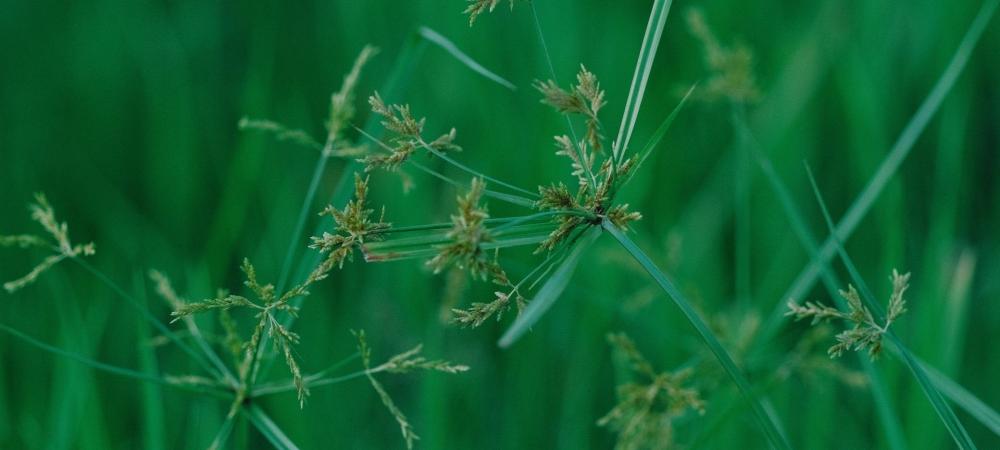
Nutsedge keeps coming back because it grows from underground tubers, often called nutlets, that survive winter, mowing, and hand-pulling. Pulling usually snaps the plant off above the tuber, and the tuber sends up a new shoot within weeks. Nutsedge also isn't a grass. It's a sedge, which is why many common weed killers and crabgrass preventers don't control it.
How Can You Tell Nutsedge From Grass?
The fastest way to tell nutsedge from grass is to roll the stem between your fingers. Nutsedge stems are solid and triangular, so you'll feel distinct edges. Grass stems are round or flat and usually hollow. Turf professionals remember it with a simple rhyme: sedges have edges.
Nutsedge leaves are also glossier and stiffer than turfgrass, and they grow out from the base in sets of three. Because nutsedge grows faster than most lawns, it often sticks up above the rest of the turf a day or two after mowing.
Two types show up in lawns most often:
- Yellow nutsedge: light green to yellow-green leaves that end in a sharp point, golden-brown seedheads, and single tubers at the tips of underground runners.
- Purple nutsedge: darker, narrower leaves, reddish-purple seedheads, and tubers that form in chains. Purple nutsedge is usually the harder of the two to control.
Why Doesn't Pulling Nutsedge Get Rid of It?
Pulling nutsedge doesn't get rid of it because the tubers stay in the soil. Tubers sit several inches below the surface, connected by thin underground runners called rhizomes that snap easily. When the top of the plant comes out, the tubers left behind sprout new plants, and the disturbed soil can wake up dormant tubers nearby.
A single nutsedge plant can produce hundreds of new tubers in one season. Those tubers can stay viable in the soil for years before sprouting, which is why one patch turns into several over a few summers.
Why Does Nutsedge Show Up in Summer?
Nutsedge shows up in summer because it's a warm-season perennial that grows fastest in heat. It emerges in late spring, outgrows the lawn through the summer months, and dies back after the first fall frost. The tubers wait underground and sprout again the next year.
Nutsedge favors certain conditions:
- Soil that stays wet from poor drainage, low spots, or overwatering
- Areas near leaky irrigation heads or downspouts
- Thin, stressed turf with open space to fill
- Lawns mowed shorter than the grass type prefers
Why Don't Regular Weed Killers Work on Nutsedge?
Regular weed killers often fail on nutsedge because most of them aren't designed for sedges. Nutsedge is neither a broadleaf weed nor a grass, so it needs herbicides labeled specifically for sedges. A product that knocks out dandelions or clover may barely touch it.
Crabgrass pre-emergents don't stop nutsedge either. Pre-emergents target weed seeds as they germinate, and nutsedge mainly spreads from established tubers, so it grows right through that barrier.
When Is the Best Time to Treat Nutsedge?
The best time to treat nutsedge is late spring to early summer, while plants are young and before they start forming new tubers. Treating early cuts off the next generation underground. Nutsedge treated in late summer has usually already stocked the soil with tubers for the following year.
Expect repeat treatments. Purple nutsedge in particular usually needs more than one application, and shrinking the supply of tubers in a lawn takes steady control over two or three seasons.
How Does a Lawn Care Program Handle Nutsedge?
Alliance TSP, Inc. includes nutsedge control in its warm-season lawn programs. Round 5 of both the Bermuda and Zoysia schedule and the Centipede and St. Augustine schedule includes a post-emergent herbicide for nutsedge. Because nutsedge fills thin spots, feeding the lawn through the season helps by keeping turf thick.
Homeowners can help keep nutsedge from spreading between treatments:
- Water deeply and less often, and fix leaky sprinkler heads.
- Correct drainage in low spots where water sits after rain.
- Mow at the right height for your grass type instead of scalping the lawn.
- Skip hand-pulling once plants are established, since it can spread the tubers.