
Why Fire Ant Mounds Keep Coming Back After You Treat Them
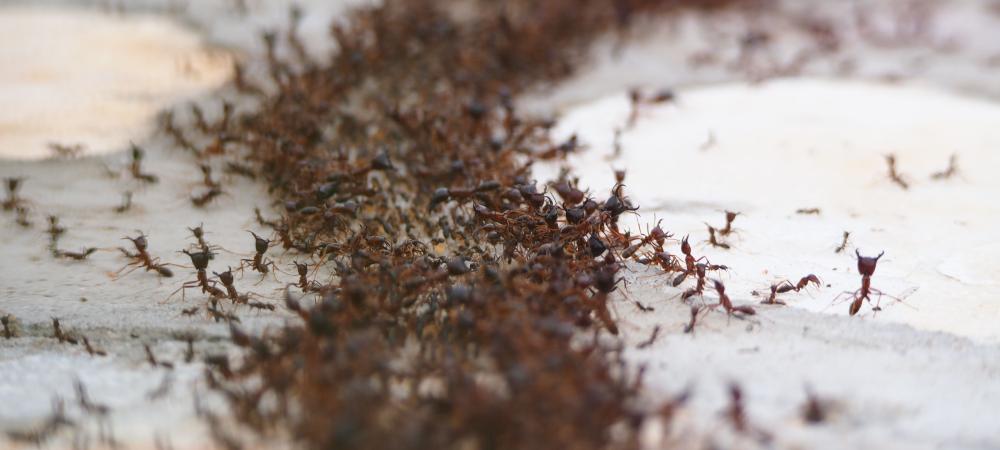
Fire ant mounds come back after treatment because the queen survived. The queen is the only ant in the colony that lays eggs, and she lives deep underground, often below the reach of a surface spray or a quick drench. Kill the workers on top and leave her alive, and the colony rebuilds within days or moves a few feet away and starts a new mound.
Why Does Killing the Fire Ant Queen Matter So Much?
Killing the queen matters because she is the colony's only source of new ants. A mature fire ant colony can hold hundreds of thousands of workers, and every one of them came from the queen. Workers that die in a treatment get replaced as long as she keeps laying eggs.
Some fire ant colonies have more than one queen. Multiple-queen colonies can spread across many mounds on a single property, and every queen has to be eliminated for the colony to collapse.
What Happens When You Disturb a Fire Ant Mound?
Disturbing a fire ant mound signals an attack, and workers respond by moving the queen to safety through underground tunnels. Kicking a mound, raking it flat, mowing over it, or pouring a product on top without soaking it deeply often leads to one or more new "satellite" mounds nearby within a few days.
A mound that disappears after treatment and reappears a few feet away is usually the same colony in a new spot, not a new infestation. Scattering the colony can actually spread the problem across more of the yard.
Do Home Remedies Like Boiling Water and Grits Kill Fire Ants?
Home remedies rarely eliminate a fire ant colony. Boiling water kills the ants it touches but often misses the queen deep in the nest, and it scalds the grass and roots around the mound. Instant grits are a popular myth. Worker ants carry grits into the colony, but the grits don't swell up inside the ants and kill them.
Gasoline and other fuels should never be used on fire ants. Fuel contaminates the soil, kills the surrounding lawn, and creates a serious fire hazard.
How Does a Two-Step Fire Ant Treatment Stop Mounds From Coming Back?
A two-step treatment breaks the cycle by handling the colonies you can see and the ones you can't. Treating mounds alone only deals with active colonies. That leaves the rest of the lawn open to hidden nests and newly arriving queens.
Alliance TSP, Inc. uses a two-step process:
- Granular lawn treatment: A professional-grade granular insecticide goes down across the entire lawn, creating a soil barrier that stops new colonies from forming.
- Targeted mound treatment: Existing mounds are treated directly with a fast-acting insecticide to eliminate active colonies at the source.
Active mounds are usually gone within 3 to 4 weeks. After that, the lawn stays protected for up to a year, though heavy rainfall can shorten that window. Treatments are kept at least 15 feet away from wells and bodies of water.
When Is the Best Time to Treat Fire Ants?
Spring is the best time to start fire ant control, before mating flights and warm weather push mound activity to its peak. Getting a lawn-wide barrier down early protects the yard before new queens land and before established colonies have a full season to grow. Fire ants stay active into fall, and mounds are easiest to spot after rain in both seasons.